Comminution
Grinding Equipment
Grinding equipment further liberates crushed mineral particles, creating the particle size range required by downstream processes such as flotation, magnetic separation, gravity separation or leaching. The mill you select defines the capacity and energy profile of your comminution circuit.
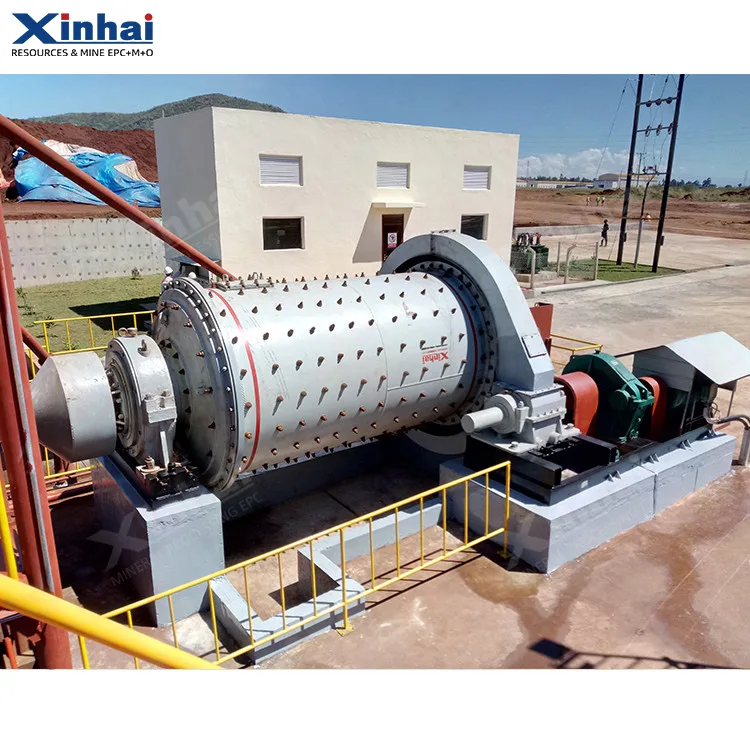
Equipment in this category
On this page you compare mill types and work through the selection variables that testwork settles. Your decision balances capital cost, operating cost and metallurgical necessity for the specific orebody.
The catalogue range spans from primary autogenous mills to fine grinding vertical stirred mills. Energy Saving Ball Mills, Grid Type and Overflow Type Ball Mills handle wet or dry grinding across diverse tonnage. Rod Mills tend to intermediate sizes and coarser products. Raymond Roller Mills serve fine dry grinding duties.
- Energy Saving Ball Mill
- Grid Type Ball Mill
- Overflow Type Ball Mill
- Rod Mill
- Autogenous Millcat.
- Vertical Stirred Millcat.
- Raymond Roller Millcat.
Names marked cat. follow the equipment handbook rather than the product catalogue naming.
What decides the selection
Test programmes typically settle the specific energy requirement using Bond work index or measured grinding energy. Then throughput and product particle size targets define the mill size and number of grinding stages. Closed-circuit classification arrangement and liner selection follow from the duty and wear considerations.
- Bond work index or measured grinding energy
- Feed and product particle size
- Pulp density
- Throughput
- Number of grinding stages
- Liner and grinding media selection
- Specific energy consumption
- Closed-circuit classification arrangement
The catalogue states that a rolling-bearing design saves 20-30 percent energy against conventional sliding bearings. This is a manufacturer product claim. Actual savings must be verified against a defined baseline machine, the ore duty and measured power draw.
Machines in this category
189 models across 8 machine types, as published in the Xinhai equipment application manual.
| Machine | Models | Indicative range |
|---|---|---|
| Autogenous Mill | 15 | Main Motor Power (kW): 310-36000 |
| Wet Grid Ball Mill | 39 | Processing Capacity (t/h): 0.25-230 |
| Wet Overflow Ball Mill | 51 | Processing Capacity (t/h): 0.25-250 |
| Wet Overflow Ball Mill (Hydrostatic Bearing) | 15 | Main Motor Power (kW): 1400-17000 |
| Wet Rod Mill | 11 | Processing Capacity (t/h): 0.4-10 |
| Vertical Stirred Mill | 12 | Processing Capacity (t/h): 0.1-0.18 |
| Dry Ball Mill | 35 | Ball Load Capacity: 1.5-158 |
| Raymond Mill | 11 | Production Capacity (t/h): 0.1-17 |
Model detail
ISO 9001 / ISO 14001 / ISO 45001 / ISO 9712 / CE / CSA W47.1 / CNAS accredited laboratory
Send the duty, get a sized proposal
Tell us the ore, the throughput and the target product. Our process engineers come back with a flowsheet position, a model shortlist and the testwork we would need to confirm it.